

Why Lata Mangeshkar is a Queer Icon
- Komolika Basu

- Sep 28, 2024
- 14 min read
Updated: Oct 13, 2024
#latamangeshkar #bollywood #bollywoodsongs #hindisongs #marathisongs #gay #lgbtq #gaysongs #lovesongs #ally #mother #loveislove

Lata Mangeshkar is Mother
Ma Saraswati is the Goddess of Knowledge, Music and the Arts in Indian Mythology. We worship her to bless us with authenticity, excellence and creativity in our intelligence and art. In the 20th century, Indians unanimously believe that our Goddess had been born on Earth with the most melodious voice of the era: notes so perfect, voice so sweet and singing so heart-touching that it made any song she sang immortal and an ethereal experience to listen to. She is mother because she is the Mother Goddess Saraswati herself - The Nightingale of India, Bharat Ratna Lata Mangeshkar.
This (The Chalachhitra Podcast Ep 2) is actually also the first episode of a series that we are doing called Mother: which is a series on women icons in the Indian film industry who made very meaningful work supporting queerness and have been allies to the LGBTQIA+ community. Lata Mangeshkar (1929-2022), or Lata didi as she was fondly called, is the greatest icon of music in India, the most legendary playback singer of the Hindi (as well as many other) film industries.
Lata Mangeshkar (1929-2022), or Lata didi as she was fondly called, is the greatest icon of music in India, the most legendary playback singer of the Hindi (as well as many other) film industries.
She is Mother as well in the queer sense of the term, which is a term that originated amongst black and latine Queer and Trans communities in the 1980s underground ballroom culture in New York City, and today has become a pop culture term adopted (or appropriated?) from gay lingo.
Mother as in House Mother (refer to FX's POSE), as in Drag Mother, as in Mother who nurtures and provides this mamta or motherly love for queer children.
Lata Mangeshkar as a Queer Icon
Now, although Lata didi wasn't necessarily queer herself or even publicly an ally to her LGBTQIA+ devotees like me, she is truly a queer Indian ICON because of so many reasons - from singing explicitly queer songs, to helping queer men and trans fem Indians discover, identify and express their feminity/love and attraction for men, or even the sapphic desires of Desi non-men, and just by excelling in her art form in ways as camp and extraordinary as she was humble and presented as ordinary.
Pyar Kiya Toh Darna Kya?
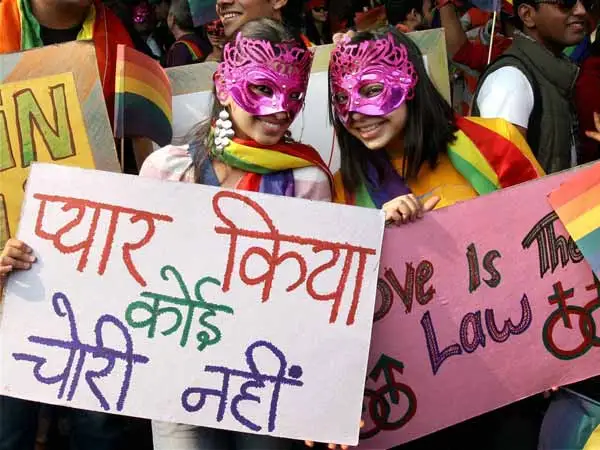
Lata didi's evergreen song Pyar Kiya Toh Darna Kya from the 1960 magnum opus of director K. Asif, Mughal-e-Azam, which is one of the greatest Hindi films ever made, and one of the grandest, and also the longest running film till the release of DDLJ, has become a queer anthem.
When she has loved, what is there to fear? These lyrics clearly resonate with the way queer and trans Indians have to struggle to love their partner(s) in public, which has many implications in their private affairs. Why can't we hold our partner's hand in public? Or sit in the metro with my head on his shoulder?
The song is picturized on Madhubala, playing the courtesan Anarkali who is in love with the Mughal prince Salim (better known as Jahangir, and played by Dilip Kumar). Even though she has been forbidden from meeting Salim, 'cause, after all, she's a lowly courtesan and he's the heir to Emperor Akbar's vast Mughal Empire, she comes out to entertain everyone in a song protesting why she cannot love then man she wants. Why should she hide her love? Why would she live a life of hiding her love when she would rather openly acknowledge her lover with her head held high with pride even at the cost of her own life? When she has loved, what is there to fear?
These lyrics clearly resonate with the way queer and trans Indians have to struggle to love their partner(s) in public, which has many implications in their private affairs. Why can't we hold our partner's hand in public? Or sit in the metro with my head on his shoulder?
You will see line's from this song written on Pride March signs - this song is a protest for the right to love - across lines of class, caste, social position, and so is Pride. It has become the unofficial anthem of Indian Pride. #PyarKiyaTohDarnaKya
Her ACTUALLY Queer Songs
Chand Matala, Umbartha (1982)
In this Marathi folk-style song, from the Marathi-language film Umbartha, we see one woman singing the song Chand Matala to another woman, with utmost pure love on their faces, as they glance at each other with warmth and longing from across the celebrations happening at their women's reformatory home.
According to a Gaysi article about this film discussed through a queer lens, "the two women involved in the relationship are introduced as two masked moons singing in the sky and exchanging glances in the film’s popular song ‘Chand Matala’. In the following scene, they are disrupted by inmates who sneakily seek them out on the reformatory’s rooftop, where they are found embracing each other."
Right after this song, we see the two women in an intimate embrace, "caught" by the other women of the home and extremely insulted for doing "unnatural things." Lesbianism at the home becomes a scandal, and the two women's story arc doesn't get any justice by the end of this acclaimed art film, but this love song in the voice of Lata Mangeshkar before all those events take place, musically legitimizes their love and makes it seem as pure and loving as can be, making sure that even while following the arc of their stigmatization and ostracization, we, the audience shall know at heart that society is wrong to not have celebrated and safeguarded their beautiful love and lesbianism. Such is the power of a song, and the brilliance of director Jabbar Patel to have imagined it and included the song in this way. It has a huge weight which affirms sapphic Indian identity because it is sung by Lata didi. Such an icon.
This love song in the voice of Lata Mangeshkar, before all those events take place, musically legitimizes their love and makes it seem as pure and loving as can be, making sure that even while following the arc of their stigmatization and ostracization, we, the audience shall know at heart that society is wrong to not have celebrated and safeguarded their beautiful love and lesbianism.
Notice that the women's glances are not the main event of the song, yet seem to be the focus of the frame in the song sequence.
Dunno Y Na Jaane Kyun, Dunno Y Na Jaane Kyun - The First Mainstream Hindi Gay Film (2010)
Lata Didi sang the title track for this film, which features the main couple in some sweet and intimate as well as heartbreaking clips (and even a drag queen at one point I think). Lata didi, as I talk about in the podcast, always understood the song's situation and storyline before singing and so I think her choice to lend her voice to this title track speaks a lot to how much she supported the gays and loved us, even if not a conscious political statement. The music director Nikhil spoke about Lataji appreciating the song's "meaningful lyrics" while talking about its sequel. Also, she is like 81 years old when she is singing this!
Although queerness has been subtly (if positive) and blatantly (if negative) portrayed in Hindi films before, this film is said to have featured the first ever gay kiss in a Hindi film! Having Lataji voice the title track to such a film is huge!
Jeena Kya Hai Jaana Maine, Dunno Y 2... Life Is a Moment (2015)
Lata didi also sang the title track for this Indo-Pak gay love story in 2015, which is believed to be her last recorded song for a film. She was around 86 years old at the time!!
As her last recorded song was in 2015, this means that from 1942 to 2015, she worked as a playback singer for 73 years!
This song features the same protagonists from the first film, this time, more explicitly in love and with scenes of their gay love. It also features a white lesbian couple who they are friends with. The clips of the two main lovers are really sweet and romantic, in typical Bollywood fashion, and it's so beautiful to see their love play out in the scenic mountains with the sound of Lata didi's voice. If the Goddess of Music sings for gay men to make love to, you know queer love is legit!
The song ends with the caption: "Love is beyond gender, religion and man-made boundaries."
Few songs - Great Impact
It really means a lot that she lent her voice to these films, because throughout these decades she is already the foremost and most renowned singer in all of India. One must understand the gravitas of Lata Mangeshkar to understand the impact of her singing a single song.
To have her, Bharat Ratna and Nightingale of India, the one voice of India - sing these songs means a LOT.
For people who do not have an idea - Indian film music is probably the number 1 consumed music in India, other than devotional songs. Films used to have around 5-8 full length original songs in them - that world with or without the narrative and were sold separately as well. To have her, Bharat Ratna and Nightingale of India, the one voice of India - sing these songs means a LOT. She was also a very smart person and I am sure that she understood the context of the film.
Aap Ki Nazron Samjha - Aligarh (2015)
Although Lata didi did not sing directly in this film, two of her songs, including this one are used to portray the protagonist's queerness. The film uses Lata ji's music as gay or femme sentimentality in the character played by Manoj Bajpayee (who is probably cishet) and the use of this long song is one of the most brilliant scenes of the film.
Maybe this scene of piercing pain and realness comes from the actually queer screenwriter of the film, the brilliant Apurva Asrani, which shows the importance of queer stories being told by queer storytellers. It truly takes the film to a different and innermost plane, and this film is one that portrayed a queer man with utmost nuance and authenticity.
In fact, the director of the film, Hansal Mehta, recently stated on the 8-year-anniversary of the film that "Lataji Is An Icon For The Gay Community." This article from Times Now states that "Manoj Bajpai's portrayal of the professor, a fervent admirer of Lata Mangeshkar, is amplified by the director's strategic use of her songs to underscore his profound sense of solitude and alienation."
"Two of Lataji’s most beloved numbers Aapki nazron ne samjha pyar ke qabil mujhe (from the film Anpadh) and Betaab dil ki tamanna yehi hai (from the film Hanste Zakhm) both composed by Madan Mohan, have been used very prominently as part of protagonist’s journey."
Mehta stated that “Aligarh is, among other things, a homage to Lataji’s voice. I am a huge fan of her singing and of Madan Mohan’s compositions. And my film’s protagonist Prof Shrinivas Ramchandra Siras was a crazy fan of hers. When Lataji had turned 60 Prof Siras had written poems in her honour.”
He "further reveals that Lataji’s voice is a huge influence on the gay community. In fact her most intimate songs of heartbreak like Chalte chalte yuhi koi mila gaya ttha (Pakeezaah) and Jaane kyon log mohabbat kiya karte hain (Mehboob Ki Mehndi) connect deeply with the gay community's sense of unfulfilled love and incomplete relationships that they often have to face."
Her Pan-Indian and Global Legacy
In a career spanning seven decades, Didi has been bestowed several prestigious awards including the Bharat Ratna, India’s Highest Civilian Award. Didi became the second vocalist to ever receive it after M S Subbulakshmi!
She is said to have recorded over 27,000 songs in 36 regional and foreign languages spanning a SEVEN-decade long career.
She passed away in 6 February in Mumbai, at the age of 92.
To listen to some of my favourite songs of Lata didi, and know more about her biography and legacy, keep an eye out on Chitranatya for those articles!
A global star!
The legendary singer’s fame goes far beyond the shores.
In 1974, Didi became the first Indian to perform in the Royal Albert Hall, London.
She has been awarded an Honorary Doctorate by six universities, including the New York University.
France conferred its highest civilian award (Officer of the Legion of Honour) on Didi in 2007.
Image and Advocacy for Equality
She was known to have been very sweet, humble and plain but assertive and stood up for herself and her community. She did a lot to revolutionaize the game for playback singers and knew how to demand for what she deserved financially, right wise etc. which is something we will also talk about on another episode.
For example, according to this blog about how Lataji "championed equality," "she also questioned why singers were never awarded for the numbers. As a result, the late 50s saw lyricists and singers getting awards. [...] A tussle with music companies followed when she sought royalty for all her songs in addition to her professional charges. When the film landscape changed with bolder concepts and suggestive numbers, she refused lascivious numbers, [...] Principles, steely grit, and utmost faith in her talent were probably the only reasons for never hesitating to take the risk."
She was Singular
Lata didi was single all her life. Whether it be a power move of independence or because she belonged to our community - that is iconic.
In the podcast, I mention that she said in an interview that she "valued finding inner happiness within oneself more than marriage and children," which is an absolutely pioneering mindset in that time, even though it is seen as trivial today.
She even said "it’s important to first find happiness and a sense of fulfilment within yourself, else the dream of being fulfilled only through marriage or children loses its significance," and talked about the wrong notion of women being "incomplete" without a husband and children. Feminist icon!
This interview was from 2013.
Why Lata Didi was my Queer, and Trans Awakening
For me, Lata didi is the source of femininity inside me.
Growing up, her songs like Mohe Panghat Pe (also from Mughal-e-Azam), Thade Rahiyo, Piya Tose Naina Lage Re, and so on, as well as Asha ji’s (her sister’s) have been essential to identifying myself with and understand my own emotions and feelings, and subsequently gender identity.
From a very young age I picked up her songs from being played in my house. One of the earliest ones was Yashomati Maiya Se Bole Nandlala from Satyam Shivam Sundaram. In fact, as I started getting into film music beyond bhajans and children’s songs, I only sang Lata or Asha or more contemporary “female” singer’s songs - like say Shreya Ghoshal. I never liked singing men’s songs.
I went for an audition as a singer for a children’s film back in Kolkata and there I sang Yashomati Maiyya Se, which is nothing like contemporary songs. I qualified and in the second round, when I was singing Barso Re Megha, they said: "sing a song by a male playback singer" - my voice hadn’t even matured properly then!
For film singing, as a trans woman, it is really hard to get into playback. Indian music like bhajans, classical music like Hindustani or Carnatic or Bengali music like Rabindrasangeet, Nazrulgeeti, and even thumris, which often are from the perspective of feminine longing for her male lover, are gender neutral but when it comes to film music, it becomes extremely gendered with the voice and body. Music isn’t bound by gender and so shouldn’t films.
Her songs, like Aap Ke Nazron Ne Samjha above, or Thade Rahiyo from Pakeezah (1972) or Dilbar from Caravan (1971) and thousands and thousands more are thumri and folk based, many sung by courtesans or female entertainers, are in the premise of loving, seducing or longing for men - be in romantic, sexual or both, and about them performing feminity. Therefore, they became integral to my own understanding of femininity and a source for identification and validation in my own feelings, longings and gender identity.
Mothering
Ultimately, it is not always a mother who chooses their child, the birth of the children make her Mother too. A lot of queer people from India and its diaspora have felt seen and understood in her songs, and queer desi people writing about her in queer contexts so vastly is probably what makes her a queer icon the most!
For example, an acclaimed international novel An Ode To Lata by Ghalib Shiraz Dhalla describes an NRI gay Indian’s journey as accentuated by the songs of Lataji. This 2002 publication really brings to light the influence of Lataji on queer Indian lives in its title. According to Google Books: "Banker by day, and denizen of Los Angeles' clubs by night, the protagonist of Ghalib Shiraz Dhalla's first novel is navigating between more than just a day job and an active social life. [...] Passionate and unflinchingly honest in its narrative, Ode to Lata scavenges the depths of one man's misguided search for love in a world of emotionally void encounters and tangled memories. All the while, Ali's story is intertwined with the unraveling of his parents' own doomed relationship and the film music of Bollywood's eminent singer Lata Mangeshkar. And it is this hopelessly romantic music that scores their tormented lives and goads them to pursue love through chaos and ecstasy."
This novel was later made into a film called The Ode in 2008.
Ali's story is intertwined with the film music of Bollywood's eminent singer Lata Mangeshkar. And it is this hopelessly romantic music that scores their tormented lives and goads them to pursue love through chaos and ecstasy.
According to this quite blunt 2011 News18 article by Vikram Phukan (who is part of the Indian queer community I believe) titled "Lata Mangeshkar a gay icon now" talks of the above book, and various other songs, people and influences which make her a Queer icon, or as I say, Mother. This article was originally published in the Bobay Dost, India's first registered magazine for the LGBTQ community.
It mentions that "Freddie Mercury, gay icon and front man of Queen, had counted Lata amongst his formative influences (he had watched her perform live in Bombay (where he grew up as a child). Listening to tracks from his rather prolific repertoire, sometimes his distinctive falsetto does indeed offer us glimpses into Lata's own virtuosity." He further says that "Mr. Mercury has been anointed as arguably the greatest vocalist of all times, but that's only because the millions in India and the diaspora don't really count when such plaudits are doled out a-dime-a-dozen. Maybe that's why Ghalib's book needed a name-change from Ode To Lata to just The Ode in its screen adaptation."
True - Lata Mangeshkar is definitely one of the greatest vocalists in the History of this world, and yet today she is not regarded enough as such due to her being a non-Western or non-English-language singer! Courses on specific singer like Taylor Swift are taught in prestigious universities in the West, and yet how many courses on the artistry or legacy of Lata Mangeshkar do we teach, even in India itself?
About Indian queer narratives, it says that "while she's only once ever sung for a man a ditty performed by a comic sidekick in drag from the film Mujhe Jeene Do, many gay men identify, in a very subliminal fashion, with the 'dual personality' so rife in Indian films, a composite created by the golden women of the silver screen emoting to Lata's self-possessed playback." The artilce further goes into Lataji's camp sensibilities which manifest in the actresses' performances that her songs are picturized on, as well as her connection with the Indian gay dating scene from earlier decades.
"And these women were disarmingly alluring, some had gigantic bouffants to ferry around on reed-thin waistlines, some had false bottoms to accentuate their hourglass frames. Others draped themselves in spectacular nine-yard saris and offered prayers in makeshift temples, with the bells tolling, and Lata's voice persistently hitting the high registers since each emotion needed the requisite airtime.
And some were so redolently doleful in the way they pined, somehow epitomising unrequited love (even though there was always going to be a happy ending in the film) that gay men in the past had held on, love had been denied, as they believed was their wont.
The self-sacrificing persona of Meena Kumari had created a whole new sub-culture in the gay desi ghettos all over the world. Her mask-like face in the classic Pakeezah was a mirror for the gay man as eternal victim. Even self-pity needed cultural trappings."
In a 2021 Homegrown article for #PrideMonth, a young queer South Asian person growing up in England recounted their memories of Lataji's songs being an integral and happy part of their growing up and coming into both their Desi and Queer identity: "No memory, however, can beat the rooftop summer nights when my family would drink themselves into oblivion, happily blasting and dancing to Lata Mangeshkar’s entire discography. To be apart of such a community and identity for so long was the most monumental. [...] Bollywood was a door to a completely different world. I remember how obsessed I became with 90’s/2000’s Hindi music. I felt a light in me that I didn’t have for years when I listened to Shreya Ghoshal, A.R.Rehman’s, and Lata Mangeshkar’s music. A couple of months after that is where I fount the director of my life, Sanjay Leela Bhansali. Before him and movies like Devdas, Bajirao Mastani, and Umrao Jaan, I never viewed my culture the way non-western cinema perceived it."
This quote highlights the immense importance of cinema and its music, in affirming our marginalized identities - and Lata didi did that for so many of us in her own way, knowingly or unknowingly,
She is such an inspiration to me and no blog or even documentary can capture the talent, divinity, vast career, her life and impact on humans across the world, and especially for the special Lata fans - queer desi people!
Make sure to listen to the episode on The Chalachhitra Podcast across all major streaming services for the full story, and check out the music of Lata didi if you've never before, or to re-introduce yourself to her. She is legendary!!


Comments